

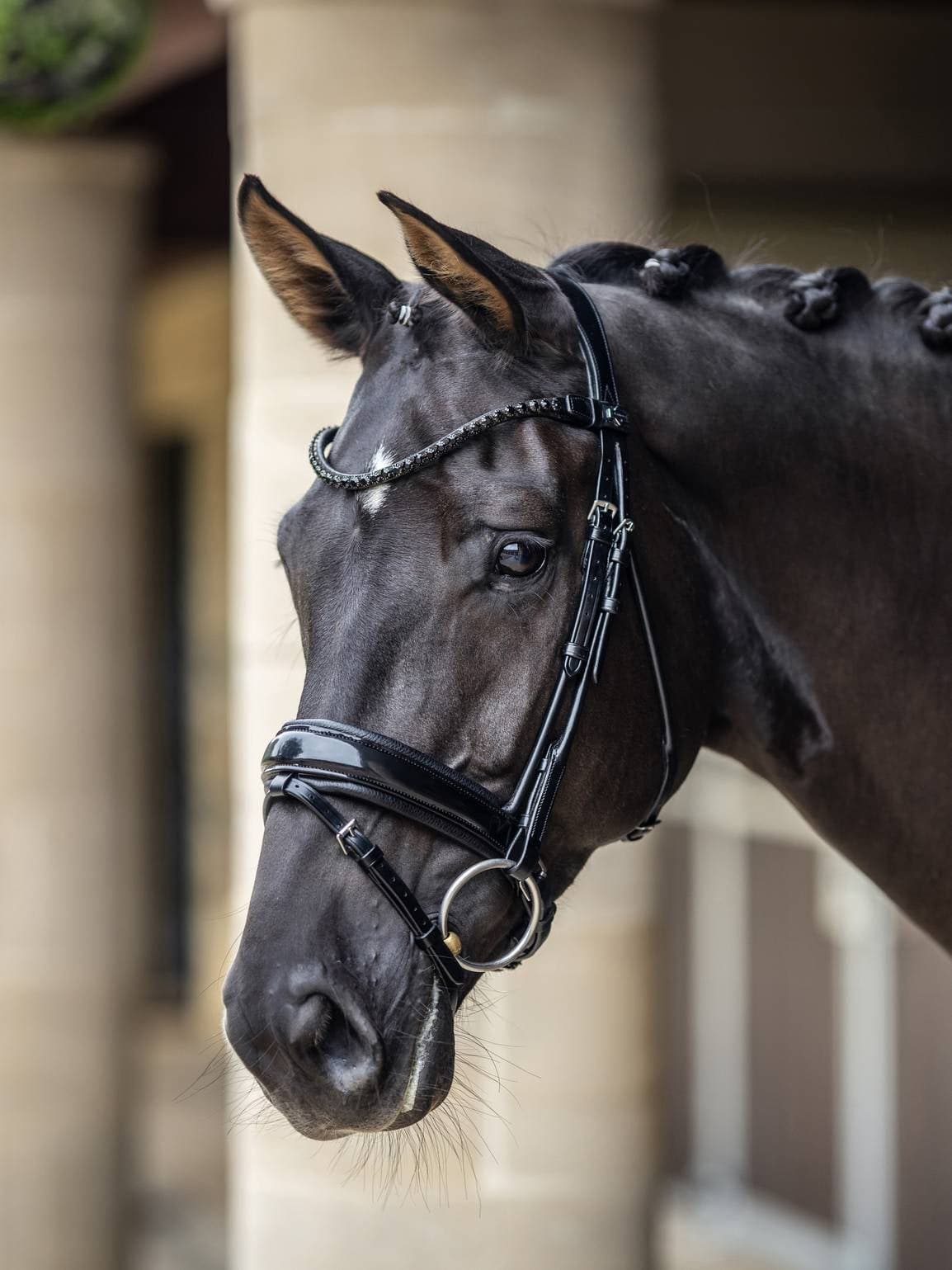

Horses work hard, and their legs take incredible strain. Although they can bear a huge amount of weight and directional stresses, a horse’s wonderful legs are agile and allow a horse to move nimbly and swiftly. Horses working on uneven ground, for long days or in competitions generally benefit from high quality leg protection and support, and are more likely to stay sound. Horse boots protect the horse’s legs during riding, lunging, injury rehabilitation, stabling or turnout, as well as absorbing some of the impact shock as the horse’s hooves hit the ground.
Using protective booting all four legs is beneficial for horses in competition level work, as both hind and front legs are vulnerable to cuts and bruising, while supportive boots can help to protect the horse’s legs from muscle and tendon strains, and significantly decrease the chance of suspensory-related injuries.
Protective boots protect the delicate structures of the leg, especially when jumping, from knocks against rails or the horse’s other legs. Boots provide tendon and ligament support, which is crucial for performance horses. Because the lower legs of horses have no padding, they can be bruised or cut easily, and protective boots minimise the risk of debilitating injuries. Protective boots are important if your horse has big movements, has an injury, or often strike another leg with a hoof.
HorseSports recommends Zandona Italian Horse Boots
Since 2005 Zandonà has created innovative, high quality equestrian products of extremely sophisticated functional design. The range of Zandonà horse boots for jumping, dressage and general riding are extremely high tech and made in Italy with modern materials for optimum care of your horse’s legs.
Made with carbon fibre for extreme lightweight protection, Zandonà horse boots feature TPU, neoprene, strategically placed vents and gel padding to give your horse’s legs the absolute best support and protection. The range includes jumping and dressage boots from neoprene pastern boots to tendon boots with integrated magnets which boost performance, circulation and dynamic balance.
Whatever your riding discipline, Zandona have your horse’s legs covered. See our full Zandona range.

Correct use of horse boots
Using leg wraps and horse boots incorrectly can inadvertently place more strain on the horse’s legs and cause damage or inflammation. If in any doubt, do ask our staff about the correct way to use your new horse boots.
It’s important that horse boots fit well, are kept clean and checked for chaffing, especially with turnout boots and bell boots. Boots that get sweaty, dirty and dusty can make cause discomfort, so regular cleaning is key.
Choosing the right horse boots
We stock a large range of horse boots, so it helps to know your main goal in using horse boots before you look at the boots we stock for your riding discipline.
- Open front jumping boots encourage a horse to be more careful going over jumps, while provide protecting the tendons from the back hooves. These are often paired with ankle boots on the hind legs.
- Dressage boots protect a horse’s legs from knocking each other, are usually lined, and easy to clean.
- Support boots are designed to support a horse’s tendons and ligaments, encasing the lower leg and featuring a fetlock strap to prevent hyperextension.
- Cross country jumping boots are designed for protection with extra padding, but are lightweight and durable.
If in doubt, do ask our knowledgeable team for advice on the right boots for your horse. We are more than happy to help!

Share:
How Thinline saddle pads deliver a closer, quieter riding connection
HorseSports are proud stockists of LeMieux Equestrian